








Master of Science in Human Resource Development

Be the Reason Work Works for People. And for Business.

Request Information

A Degree for People and Culture Leaders

Barry’s Master of Science in Human Resource Development prepares you to improve how people learn, perform, and grow at work while connecting people strategy to business results. You will learn to use workforce data to identify organizational needs and close the gap between where an organization is and where it needs to be. The program takes you beyond traditional Human Resources (HR) and prepares you to drive enterprise-wide transformation through talent and leadership development, learning strategy, and organizational design.

HRD professionals help organizations reduce turnover, accelerate skill adoption, and create workplace conditions that support high performance. As AI changes jobs and ways of working, they help leaders redesign roles and systems so people can learn, adapt, and contribute to business success.

Designed for working professionals, the program combines applied projects with real organizational challenges. If you are seeking executive advancement, you can transition from tactical support into high-leverage roles such as:

Learning & Development Manager

Director of People and Culture

Organization Development Consultant

Head of Employee Experience

Director of Talent Development

Leadership Development Business Partner

Barry offers South Florida’s only Master of Science in Human Resource Development. Its comprehensive curriculum is aligned with professional competency models from the Society for Human Resource Management (SHRM) and the Association for Talent Development (ATD).

Apply Now Request Information

Video Thumbnail

MS in Human Resource Development at a Glance

cap-stop-watch

Program Length: 15 Months

person stairs flag

Total Credits: 36

money bag calculator

Cost Per Credit: $650

instructor

Format: Evening classes, live online or in person in Miami Shores (7-week courses)

6 people flag

Hands-On Learning: Real-Client Performance Consulting Practicum

person-arrow-star

Start Term: Spring or Fall

  • cap-stop-watch

    Program Length: 15 Months

  • person stairs flag

    Total Credits: 36

  • money bag calculator

    Cost Per Credit: $650

  • instructor

    Format: Evening classes, live online or in person in Miami Shores (7-week courses)

  • 6 people flag

    Hands-On Learning: Real-Client Performance Consulting Practicum

  • person-arrow-star

    Start Term: Spring or Fall

HRD vs. HRM vs. I/O PsychologyWhich Master’s Degree Fits Your Goals Best?

Master’s degrees in Human Resource Development (HRD), Human Resource Management (HRM), and Industrial and Organizational (I/O) Psychology offer different approaches to improving work and organizations. These fields overlap, and the comparison below can help you choose a program that fits your career goals.

  • HRD is the performance improvement side of people operations. HRD professionals have expertise in diagnosing why performance is falling short, designing learning experiences and transforming organizations into learning eco-systems, scaling leadership development, and consulting on organizational change that closes the performance gap. The work is learning and development (L&D), talent development (TD), leadership development, performance improvement, people analytics, and organization development (OD). Graduates move into L&D, TD, OD, HR business partner, and consulting roles. Graduates with the HRD degree are prepared to excel as leaders of people and culture.

  • HRM focuses on how organizations hire, manage, reward, and retain their workforce. It covers recruitment, compensation and benefits, employee and labor relations, employment law, and HR systems. Career paths include HR generalist, HR manager, compensation and benefits manager, and HR business partner.

  • I/O psychology applies psychological theory and research to understand and improve behavior at work. Programs emphasize research methods, statistics, psychological measurement, and assessment. Career paths include assessment consultant, people analytics specialist, and organizational researcher.

Highlights

THE PERFORMANCE CONSULTING PRACTICUM

Real clients.
Real challenges.
Meaningful work.

In your final semester, partner with a nonprofit or small business to assess performance needs, investigate their causes, and develop solutions grounded in organizational data and scholarly research.

Apply your consulting and facilitation skills to work with your client to select, implement, and evaluate a solution tailored to the organization’s needs.

2,500+

Hours of student consulting

40+

Nonprofit organizations served

FROM INSIGHT TO ACTION

1

Assess the needs

Collect and analyze data to identify performance gaps and client priorities.

2

Investigate the causes

Use organizational data and research to understand what contributes to performance gaps.

3

Develop a solution

Use evidence to design a solution with your client.

4

Implement and evaluate

Put the solution into practice and assess its effectiveness.

Coursework Built for What Organizations Need the Most

Learn to diagnose organizational challenges and design solutions grounded in evidence and connected to business outcomes. Your coursework brings together workforce analytics, coaching, leadership development, learning technologies, and organizational change to improve how people and organizations perform.

Courses include:

People Analytics and AI for Workforce Intelligence

Use workforce data and emerging tools to make talent decisions you can defend with evidence.

Fundamentals of Coaching in the Workplace

Apply evidence-based coaching methods as a tool for transforming leadership and team performance.

Change and Organization Development

Design and lead behavioral-science-based interventions in complex organizations.

Advanced Learning Technologies

Learn to strategically use innovative learning technologies to impact organizational results and drive performance improvement.

High Career-Growth Potential

Organizations are investing heavily in workplace and workforce transformation. A graduate degree in HRD positions you for leadership roles in learning and development, talent management, and organization development.

Training and Development Managers:

$133,000

median annual wage, with the top 10% earning more than $233,600. Employment is projected to grow 6% from 2025 to 2035, faster than average.

Human Resources Managers:

$149,280

median annual wage, with the top 10% earning more than $267,810. Employment is projected to grow 6% from 2025 to 2035, faster than average.

Source: U.S. Bureau of Labor Statistics, Occupational Outlook Handbook. May 2025 wage data; 2025 to 2035 employment projections. Average projected growth across all occupations is 3%.

A Path to Professional Certification

The curriculum is aligned with professional competency frameworks from SHRM and the Association for Talent Development (ATD), providing a foundation for credentials such as:

SHRM-CP

SHRM Certified Professional

APTD

Associate Professional in Talent Development

CPTD

Certified Professional in Talent Development

Each credential has its own exam and eligibility requirements. ATD certifications also require relevant professional experience. Coaching coursework incorporates the International Coaching Federation’s Core Competencies to strengthen your coaching skills.

What You'll Learn

People Analytics and AI

Learn to collect and analyze reliable workforce data to identify organizational needs. Build dashboards and use AI tools to investigate patterns in learning, performance, and employee experience. Turn your findings into recommendations connected to business goals.

Change and Organization Development

You will learn how to scale change initiatives across the organization, design interventions at the level of structure and culture rather than symptoms, and lead change process in a human-centered way. This is the skill set that moves HRD graduates into consulting and executive roles.

Leadership and Coaching

Diagnose leadership and team challenges using assessments, stakeholder insights, and organizational data. Design coaching and leadership development solutions grounded in those findings and connected to business outcomes. Guide leaders and teams through changes in strategy, structure, and ways of working.

Coursework maps to the International Coaching Federation (ICF) competency framework and provides a foundation for a coaching career. ICF credentialing has separate education, experience, mentor coaching, and assessment requirements.

View CurriculumView Certificates

Where MSHRD Graduates Work

Graduates of this program hold roles in learning and development, talent and leadership development, organization development, and consulting.

Learning and Development

Learning and Development Specialist Senior Learning and Development Manager Director of Learning and Development VP of Learning and Development Chief Learning Officer

Talent Development

Talent Development Manager Director of Talent Development Senior Talent Management Specialist

Organization Development and Change

Organizational Development Consultant Change Management Lead Organizational Effectiveness Manager

People Analytics

People Analytics Analyst Workforce Intelligence Manager

HR Leadership

HR Business Partner Senior Global HR Business Partner Head of People and Culture Head of People Operations Chief People Officer

Consulting and Coaching

Performance Consultant Executive Coach Independent Management Consultant

Success and Career Outcomes of Our Graduates

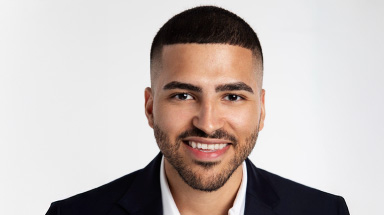
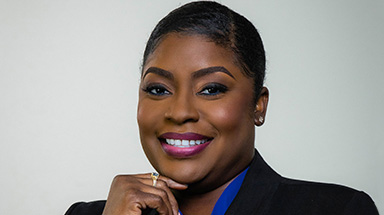
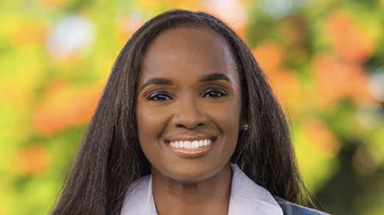
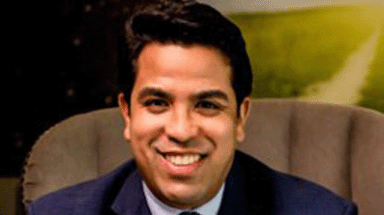
  • Senior Global HR Business Partner @ UniUniFelix Vega-Pagan, SHRM-CP

  • Executive Director of Learning & Development | Atlantis, The Bahamas Athena Russel

  • Head of Organizational Learning, Community Development Institute (CDI)Jubal Raffety

  • Manager, Training and Organizational Development Commonwealth Bank BahamasD'Adra Smith

  • Master Facilitator |Management Consultant | Professor| Venture Capital & Private Equity InvestmentsOscar E. Arias

  • Global, Talent Development Partner | Project Management InstituteJamiel Rivero

  • Employee Experience Specialist with the Air Force, Washington DCDaniel Brown

  • Human Resources Manager at Atlantis BahamasLeslie Lopez

  • Webinar Producer | Technical and Strategic Advisor | Program ManagerApril Pagan

  • Project Coordinator at Millennial WeekByron Lee

  • Senior Talent Management Specialist at Atlantic Health SystemGeralda Vastey

  • Learning and Development Coordinator at Dart Enterprises Ltd.Melesia Adderley

  • Experienced Leadership and Development ProfessionalCorina Velasquez

Upcoming Information Sessions

Frequently Asked Questions

  • A master’s in human resource development (HRD), prepares you to take on strategic roles in people operations and human capital management. It focuses on competencies needed to drive progress in people and culture through learning and development, talent development, leadership development, performance improvement, people analytics, and organization development. Barry’s MSHRD is a 36- credit MS that takes 15 months.

  • An MS in HRD prepares you to improve learning, leadership, and organizational performance, using workforce data to connect people strategies to business results. An MS in HR or HRM focuses on how organizations hire, manage, reward, and retain their workforce. It covers recruitment, compensation and benefits, employee and labor relations, employment law, and HR systems.

  • Choose HRM if you want to run the HR function: staffing, compensation, labor law, HR systems. Choose HRD if you want to diagnose and close performance gaps, design learning and leadership development, use workforce data to improve how people and organizations perform, and help organizations build successful Human+AI partnerships.

  • No. I/O psychology applies psychological theory and research to understand and improve behavior at work. Programs emphasize research methods, statistics, psychological measurement, and assessment. HRD focuses on diagnosing and closing performance gaps through learning and leadership development, people analytics, and organization development. Both fields include research and applied practice.

  • Yes. Barry University offers the MS in Human Resource Development on its Miami Shores campus with evening classes and live online for students who prefer not to commute. It is the only comprehensive HRD graduate program in South Florida.

  • Yes. Classes are offered live online in the evening, so you attend in real time with faculty and classmates rather than working through recordings alone.

  • Fifteen months. The program is 36 credits and is built for working professionals, with evening classes and a spring or fall start.

  • Tuition is $650 per credit, or $23,400 for the 36-credit program, excluding fees. Contact the Student Accounts Office for a current breakdown of required fees.

  • Graduates work as learning and development managers, talent development managers, organizational development consultants, HR business partners, people analytics specialists, performance consultants, and executive coaches. Senior paths include director and VP of learning and development, head of people and culture, and chief people officer.

  • An HRD professional finds out why an organization is not performing the way it needs to, then designs and implements the fix. That might be a leadership program, a redesigned onboarding process, a change initiative, an upskilling plan, or a restructuring. The discipline is defined by diagnosis before solution, and by measuring whether the solution worked.

  • No. Applicants come from HR, training, operations, education, healthcare, hospitality, and the military. You need a bachelor’s degree from an accredited institution, two references, a resume, and a statement of purpose of 500 to 750 words. The GRE is not required.

  • Yes. Barry University is accredited by the Southern Association of Colleges and Schools Commission on Colleges to award baccalaureate, master’s, specialist, and doctoral degrees.

  • The curriculum is aligned with SHRM and the Association for Talent Development (ATD), providing a foundation for SHRM-CP, APTD, and CPTD certification. Coaching coursework maps to the International Coaching Federation (ICF) competency framework. Each credential has its own exam and eligibility requirements. ATD certifications also require relevant professional experience.

  • Apply early to allow time for admission and any required immigration processing. Admission to Barry University does not guarantee a student visa. Review Barry’s international graduate admissions guidance for application requirements and next steps

Take a Sneak Peek into HRD in Practice

Video Thumbnail

Admission Requirements

webpage

A completed Application

No GRE

GRE Not Required

grad

A baccalaureate degree from a regionally accredited or internationally recognized institution

certificate

Two References

shield

Statement of purpose, 500-750 word requirement

certificate

Resume

Financial AidAffordable for You

At BarryU, our tuition is competitive, affordable and still promises all the perks of a private school education. Our cost per credit is in-line with other institutions, but we offer a mission-driven educational experience and provide our students with small class sizes, personalized attention, and academic excellence. Scholarships, graduate assistantships, and financial aid can also be explored to help offset overall costs.

Barry University participates in the full array of federal and state financial aid programs. At Barry, we are committed to doing all we can to help you finance your education.

Barry University's Financial Aid staff will assist you through the financial aid application process.

Scholarship Opportunities

The SHRM Foundation offers awards for graduate study in human resources, and Fastweb lists a wide range of graduate scholarships. Barry’s own scholarship system is a good place to start.

Sign in to use the pins