


Thirty-three percent of the Commonwealth of Dominica suffers from some form of sickle cell disease. Kellyn George ’10 represents one of those people personally, but she represents all of them in her day-to-day work.
By Maureen Harmon
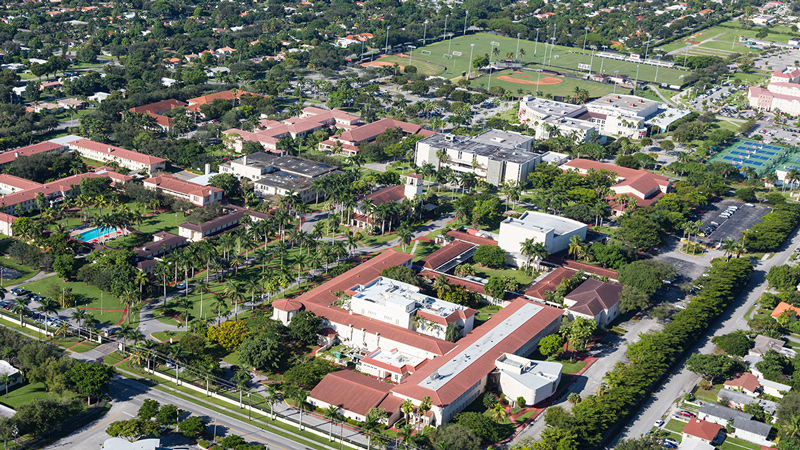
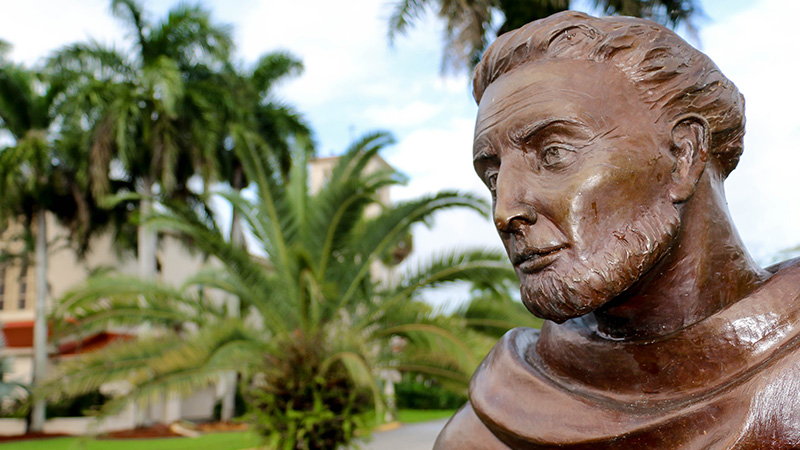
Barry is a Catholic university in the Dominican tradition, founded in 1940 in Miami Shores. Learn about our mission, our history and where we're headed.
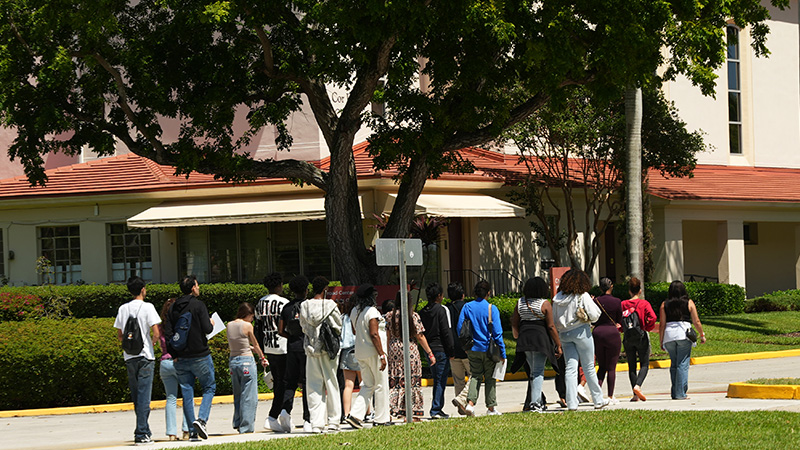
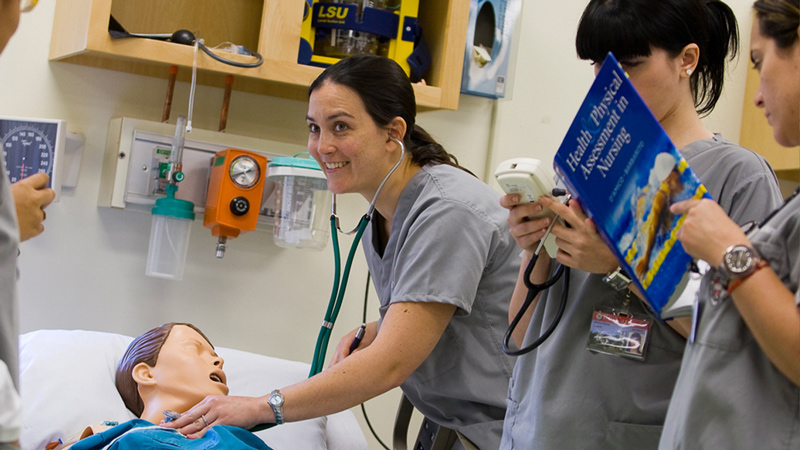
With our Catholic liberal arts heritage and over 100 degree programs, including nursing and marine biology, from bachelors through PhDs, we've got your options covered. Focus on arts and sciences, business, education, social work, communication, nursing, medical sciences, theology, or law. Take things further with personalized research and experiential learning opportunities, on and off-campus. Enhance your prospects with hands-on internships at some of the country's top organizations.

The Career and Experiential Learning Team educates students and alumni on the essential job searching and life skills to propel them to succeed in the increasingly competitive global marketplace.

Continuing Education (CE) offers a variety of courses and non-credit programs designed to respond to the diverse educational interests and lifelong learning needs of individuals of all ages. We offer certificate, credential exam preparation, and licensure programs for professional and personal enrichment.
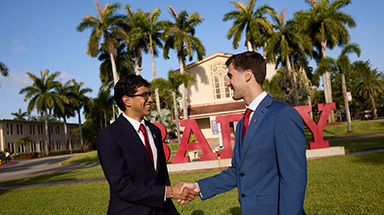
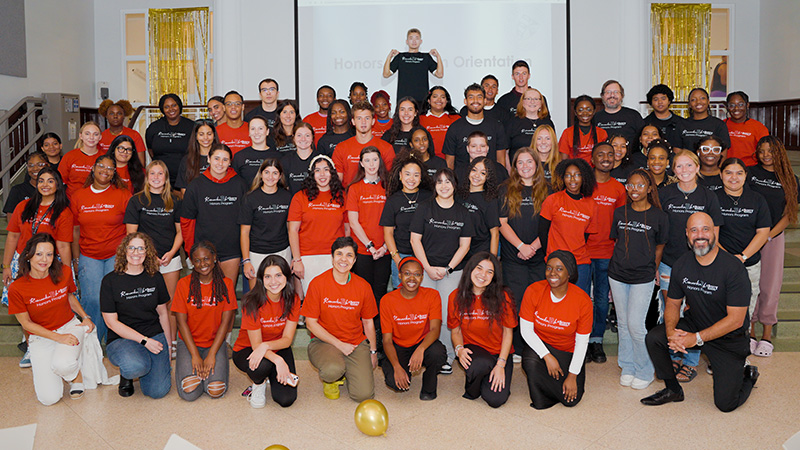
The Honors Program at Barry is designed to challenge, enrich, and prepare especially motivated students to pursue their fullest potential. By participating in a rigorous curriculum rounded out by an array of edifying and interactive events, students explore crucial issues that we face in our daily lives. Students are given the space for discussion and debate and the opportunity to learn from experts in their fields. The Office of Financial Aid can assist with determining eligibility for the Honors Program.
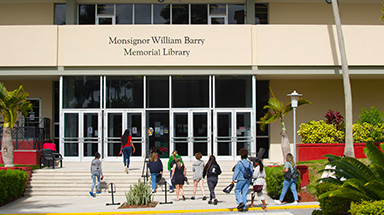
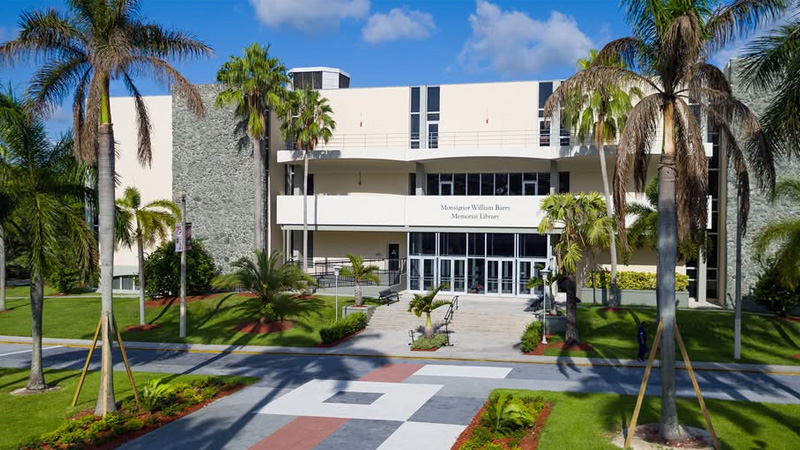
The Monsignor William Barry Memorial Library is located in the center of the beautiful Miami Shores campus of Barry University. The Library is named in loving memory of Monsignor William Barry, one of the founders of Barry University and an inspirational figure in the Catholic Church within the Archdiocese of Miami. The extensive Library research collections include more than 950,000 physical items, over 40,000 print and on-line journal subscriptions, and several thousand on-line books and streaming video resources.
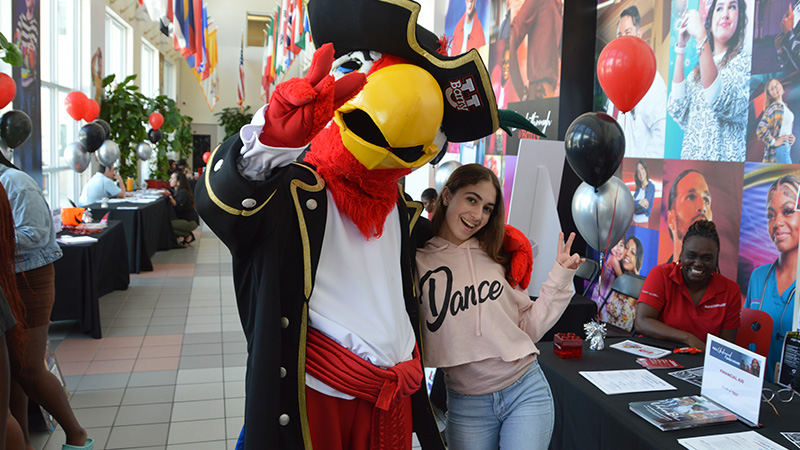
At Barry University, you will experience a small community atmosphere where you can always rely on our administrators and faculty for advice, encouragement and personal attention. We take great pride in giving individual attention from the very beginning. You can start building a personal relationship with one of our admissions counselors who will help answer any questions, and guide you through the entire admissions and enrollment process.

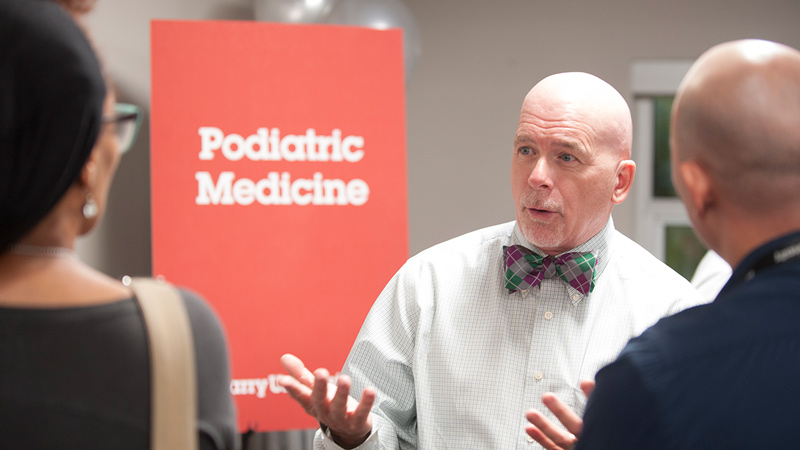
Continuing Education (CE) offers a variety of courses and non-credit programs designed to respond to the diverse educational interests and lifelong learning needs of individuals of all ages. We offer certificate, credential exam preparation, and licensure programs for professional and personal enrichment.

High school students: Get a jump-start on your college education with dual enrollment courses from Barry University! You can earn high school and college credit at the same time, right at your own school.
Barry University is committed to provide you with a dynamic and flexible approach to your degree pathway through our online courses and degree programs. We understand that balancing academics, work, and personal commitments can be challenging. That's why our online offerings are designed to fit seamlessly into your busy schedule, allowing you to pursue your educational goals without compromising on other important aspects of your life.

We are committed to providing programs and services that are guided by Barry University's rich educational mission and intended to enhance your Barry experience. Through partnerships with others in the university community, we aim to create experiences that will help transform you into leaders for a just and humane world.
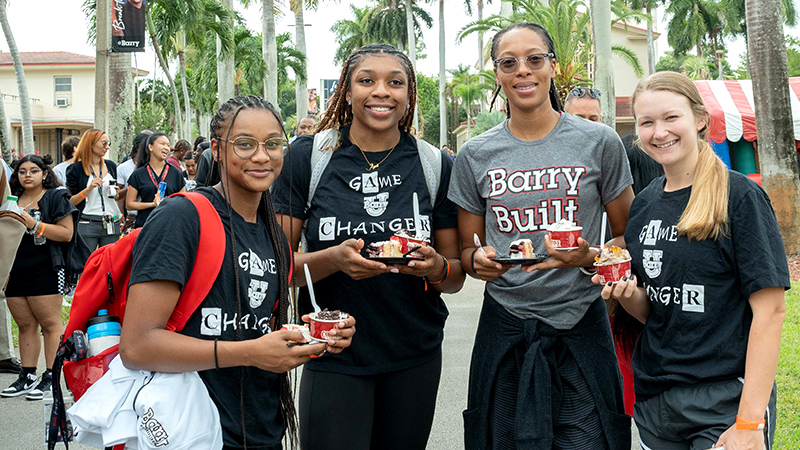
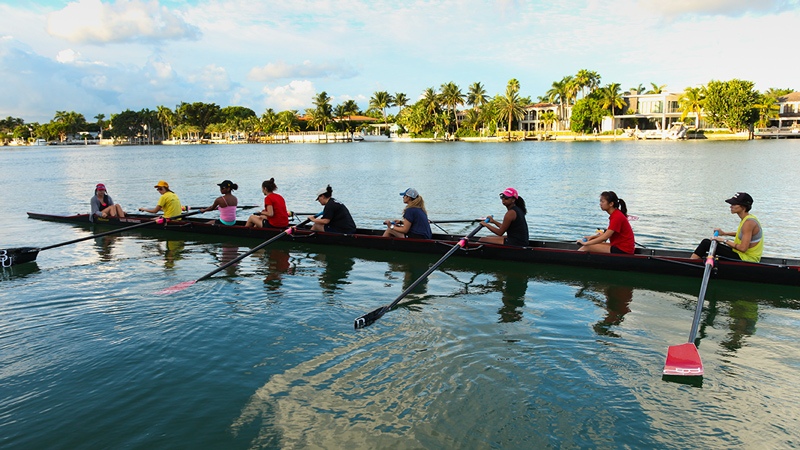
We are an NCAA Division II school and a member of the Sunshine State Conference with 12 varsity teams, including men's baseball, basketball, golf, soccer and tennis; and women's basketball, golf, rowing, soccer, softball, tennis and volleyball. So far, we've won 24 NCAA championships, had 338 All-Americans, 413 Scholar All-Americans, and nine NCAA "Women of the Year" finalists, the most of any Division II school. Not bad at all, but we're going for more.
For students currently enrolled in classes at Barry, we have a wealth of resources you can tap into to bring ease and efficiency to your university experience. Get the help you need with administrative or financial questions, or check out course catalogs to help plan your schedule by semester. All the information you need to excel is at your fingertips.

Access research resources, technology, study spaces, and expert support to help you succeed academically.
By Maureen Harmon
It was a relatively normal summer evening in 2010 for Kellyn George ’10. She had just gotten home from an eight-hour shift at work and was feeling a little sluggish. Nothing terribly abnormal, she thought. Within hours, though, George was on the floor of her apartment in massive pain. She reached out to her boyfriend at the time, who came and carried her down six flights of stairs to take her to the hospital. George was hemorrhaging, though she wouldn’t learn that until she woke up from a coma at the hospital five days later.
Right around the same time, an eight-year-old boy in George’s home village in the Commonwealth of Dominica suffered similar symptoms—a sharp decrease in hemoglobin levels. He died. Both George and the little boy had sickle cell disease, an inherited blood disorder that affects the red blood cells and prevents them from carrying oxygen throughout the body. “Our situation was the exact same,” says George. “It was a normal day, and by the end of the day it was a crisis.” But there was one major difference: George—whose family has known since her birth that she had sickle cell disease—received care in the U.S. The little boy—whose family may or may not have even been aware of his condition—was treated in Dominica, without the same technologies, treatments, and sickle cell education.
The boy’s death haunted George, so when she returned to Dominica a year later, she started to do research into sickle cell disease within the Dominica population. What she learned startled her: 33 percent of the small island population carried some sort of sickle cell disease— anything from sickle cell anemia to sickle cell trait. What was more startling: the newborn screening that she was lucky to receive in the late ’90s had been decommissioned to some level, so many people from Dominica were unaware that they had the genetic disorder. “Remember,” says George, “it’s a small island population— there’s always a resource strain. So some things get put on the back burner.”
Even so, it didn’t sit right with her. Having the disease herself, facing death, and knowing a little boy had died when there was a chance he didn’t have to prompted George to take action. Within a year, the Sickle Cell Cares Foundation was born.
"If you are aware of what challenges you face early on," says George, "you're better equipped."
“I had the opportunity to travel to London, attend various functions, including an award ceremony at Buckingham Palace,” says George. That recognition led to a number of networking opportunities for George and the Foundation, and those opportunities turned into partnerships. She became a One Young World Ambassador. She forged partnerships with neighboring islands. She partnered with other regional organizations for sickle cell disease, including CAREST, the Caribbean Association for Research on Sickle Cell and Thalassemia. “That puts us in touch with the sickle cell units of Jamaica, which is considered the premier sickle cell research and treatment institute in the Caribbean,” says George.
In 2015, George received the Queen’s Young Leaders Award, a program that “celebrates and supports exceptional young people from across the British Commonwealth for taking the lead in their communities and using their skills to transform people’s lives.”
Sometimes George’s phone rings late at night. At the other end of the line is often a family with questions. “They might say, ‘My daughter is in the hospital. This is what’s going on. What should I do?’” says George. “I’m not a doctor or a nurse. So I try not to give medical advice. What I will do is say, ‘From my experience, if I had to get blood transfusions I would ask the nurses X, Y, and Z.’”
The Sickle Cell Cares Foundation—built to raise awareness and education around sickle cell disease in Dominica—is rooted in George’s experience. She knows her story can help others and is willing to share it at every turn. “I talk about it all the time,” she says. Part of her story is recognizing her own journey. Prior to coming to Barry, she knew she carried the disease, but didn’t know what triggered it. She learned quickly that stress will do it. She knows, too, that if she starts to feel more tired than usual, she needs to rest—no matter what. She knows her normal hemoglobin level is 7.8 to 8 grams per deciliter, so if she feels off, she proactively asks her doctors to check it. She has a support network—the boyfriend at the time of her collapse in 2010, for example—who know how to speak for her if she is unable to speak for herself.
But her overall goal with the foundation is to speak up—to share information about the disease in all its forms and help others who suffer. George, who worked as a laboratory research assistant with Dr. Stephanie Bingham in the Biology Department at Barry, is no stranger to digging into research and disseminating information. In its early years, the Foundation was all about educating the healthcare community and the population of her island home. In 2015, George received the Queen’s Young Leaders Award, a program that “celebrates and supports exceptional young people from across the British Commonwealth for taking the lead in their communities and using their skills to transform people’s lives.”
When COVID-19 hit, things slowed down a bit, as healthcare reprioritized around the pandemic, but George is ramping back up. She recently met with colleagues in Guadalupe to help produce webinars for healthcare professionals to bring information about the latest treatments and therapies— including the promise of gene therapy—to the table. And, of course, they never stopped their newborn screening program to help families. “If you are aware of what challenges you face early on,” says George, “you’re better equipped.”
“We’re trying to bring the treatment protocol into the 21st century. We’re trying to bring it up to date, so our clients, our patients, don’t have to suffer,” says George. “They can take a proactive approach and reduce mortality rates.”
The next hurdle for the Foundation will be tackling mental health issues around sickle cell disease. “We’re seeing better treatments are available, and people can live longer,” says George. But too often, they have been told their time is limited. “So now we are facing issues where those with the disease are having mental health issues because they never aspired to do anything,” says George. “They never went to finish high school. They never went to college. They didn’t go after that job. They didn’t get married to that person.”
What started with George has grown to include two staff nurses, two affiliated doctors, a board of six, and an internship program that has ushered 50 interns through the Foundation since 2018. Every year, George estimates, 3,000 people across the country are more knowledgeable about sickle cell disease than the year before.
“We’re trying to bring the treatment protocol into the 21st century. We’re trying to bring it up to date, so our clients, our patients, don’t have to suffer.”
Today, George is recovering from total hip replacement at the age of 34. “What happens with sickle cell is that clots can form and cut off blood flow to specific areas of the body,” she says. “There’s a really, really tiny vessel, a tiny blood flow system right there around the pelvis area, and it feeds into the femur. Once that area is cut off from receiving nutrients from the blood, your bone starts to degenerate.” Vascular necrosis of the femoral head is the technical term. Foundation staff, interns, and friends think George’s surgery and recovery would make for some great educational material for their audience. They’ve even suggested she document it through video. As much as George has been open about her experience with sickle cell, she’s drawing the line here. She’s fought through a lot of pain in her recovery. And while she’s willing to talk about the experience with anyone who asks, she plans to keep the day-to-day struggle private. “Physical therapy is the most painful thing I’ve ever done in my life. I never, ever imagined that I would have to learn to walk again at 34,” says George. She even put her 35th birthday celebrations on hold. “I want to celebrate 35, but I don’t want to be on crutches.”
George’s current journey is one of strength and perseverance. But it’s also a reminder that she lives with a disease that needs constant vigilance. When she recovers from her surgery, she will walk into those 35th birthday celebrations. She’ll take a minute to enjoy the fact that she has lived long past what doctors expected of her. And then she will continue the work that will allow others to do the same.


