


Students Prepare To Tackle Serious Social Issues, Learn About ‘People Power’
Service-Learning Module Supports Countywide Coalition Efforts
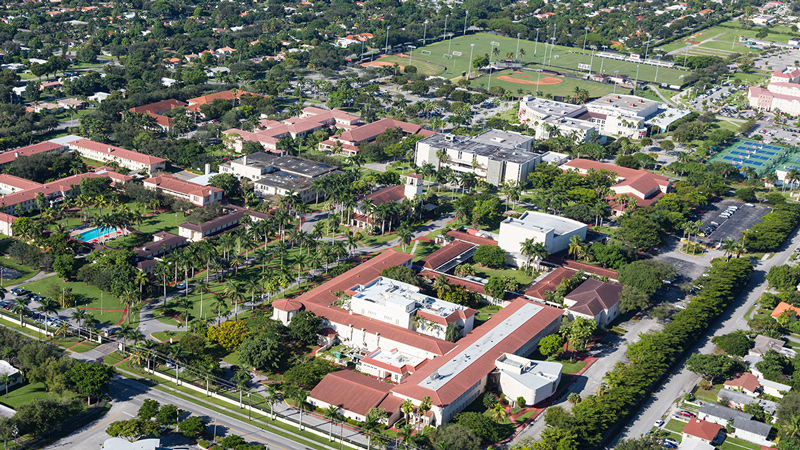
Barry is a Catholic university in the Dominican tradition, founded in 1940 in Miami Shores. Learn about our mission, our history and where we're headed.
With our Catholic liberal arts heritage and over 100 degree programs, including nursing and marine biology, from bachelors through PhDs, we've got your options covered. Focus on arts and sciences, business, education, social work, communication, nursing, medical sciences, theology, or law. Take things further with personalized research and experiential learning opportunities, on and off-campus. Enhance your prospects with hands-on internships at some of the country's top organizations.
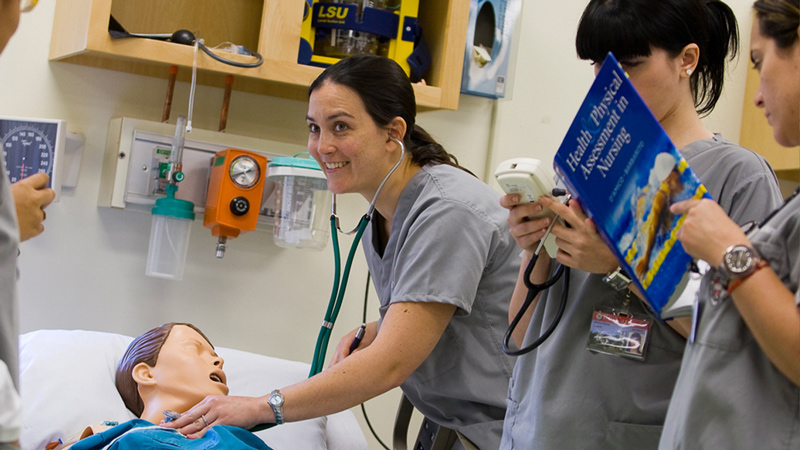

The Career and Experiential Learning Team educates students and alumni on the essential job searching and life skills to propel them to succeed in the increasingly competitive global marketplace.

Continuing Education (CE) offers a variety of courses and non-credit programs designed to respond to the diverse educational interests and lifelong learning needs of individuals of all ages. We offer certificate, credential exam preparation, and licensure programs for professional and personal enrichment.
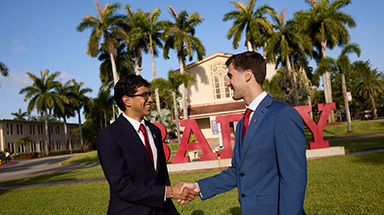
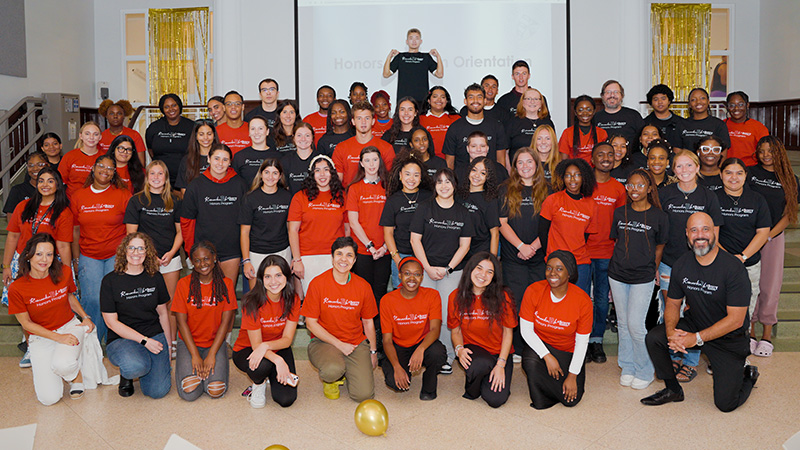
The Honors Program at Barry is designed to challenge, enrich, and prepare especially motivated students to pursue their fullest potential. By participating in a rigorous curriculum rounded out by an array of edifying and interactive events, students explore crucial issues that we face in our daily lives. Students are given the space for discussion and debate and the opportunity to learn from experts in their fields. The Office of Financial Aid can assist with determining eligibility for the Honors Program.
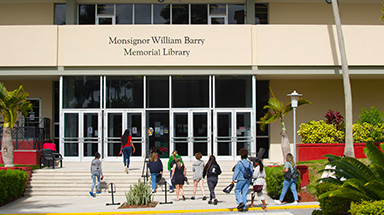
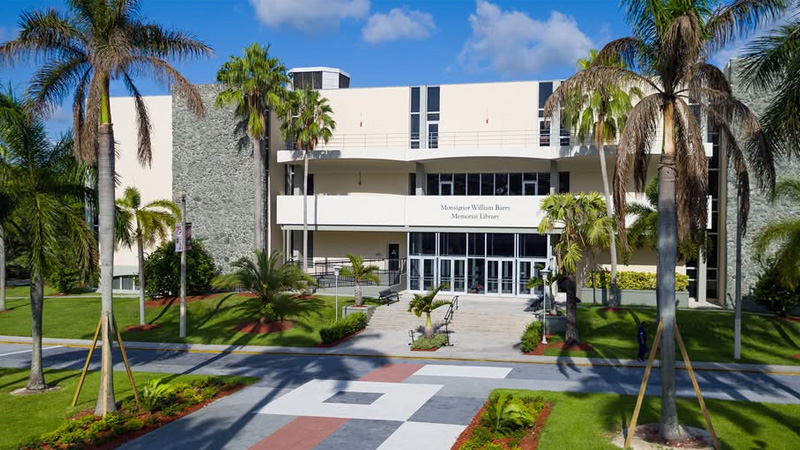
The Monsignor William Barry Memorial Library is located in the center of the beautiful Miami Shores campus of Barry University. The Library is named in loving memory of Monsignor William Barry, one of the founders of Barry University and an inspirational figure in the Catholic Church within the Archdiocese of Miami. The extensive Library research collections include more than 950,000 physical items, over 40,000 print and on-line journal subscriptions, and several thousand on-line books and streaming video resources.
At Barry University, you will experience a small community atmosphere where you can always rely on our administrators and faculty for advice, encouragement and personal attention. We take great pride in giving individual attention from the very beginning. You can start building a personal relationship with one of our admissions counselors who will help answer any questions, and guide you through the entire admissions and enrollment process.
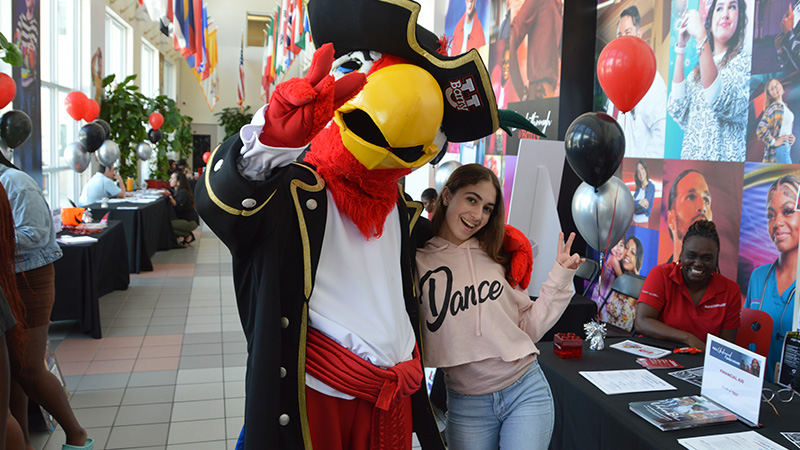

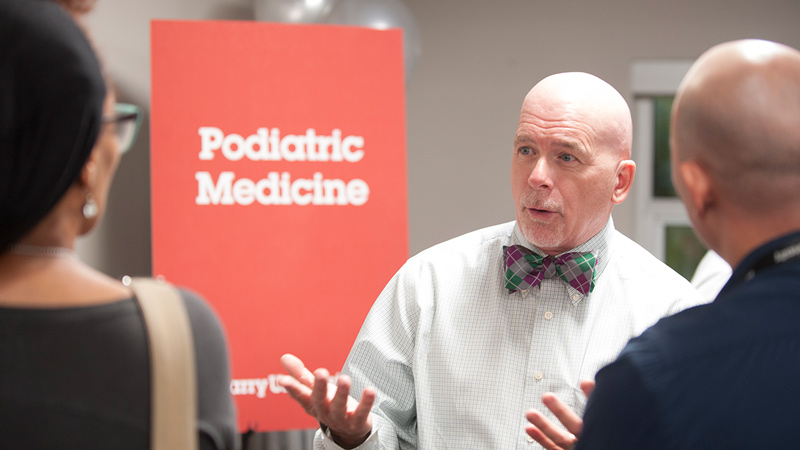
Continuing Education (CE) offers a variety of courses and non-credit programs designed to respond to the diverse educational interests and lifelong learning needs of individuals of all ages. We offer certificate, credential exam preparation, and licensure programs for professional and personal enrichment.

High school students: Get a jump-start on your college education with dual enrollment courses from Barry University! You can earn high school and college credit at the same time, right at your own school.
Barry University is committed to provide you with a dynamic and flexible approach to your degree pathway through our online courses and degree programs. We understand that balancing academics, work, and personal commitments can be challenging. That's why our online offerings are designed to fit seamlessly into your busy schedule, allowing you to pursue your educational goals without compromising on other important aspects of your life.

We are committed to providing programs and services that are guided by Barry University's rich educational mission and intended to enhance your Barry experience. Through partnerships with others in the university community, we aim to create experiences that will help transform you into leaders for a just and humane world.
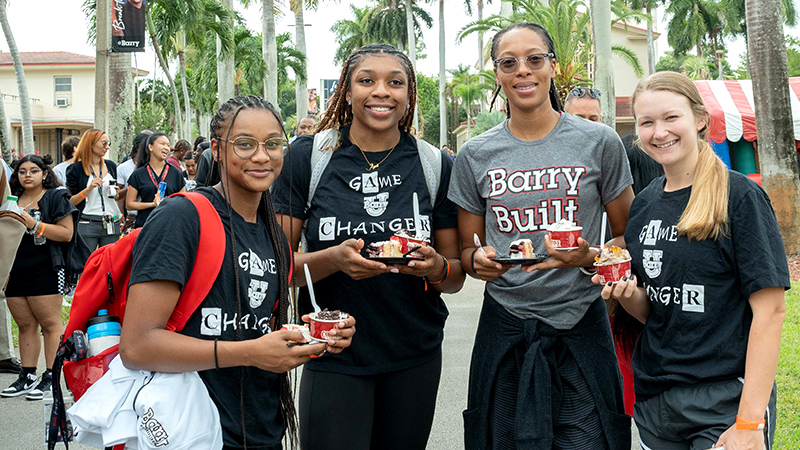
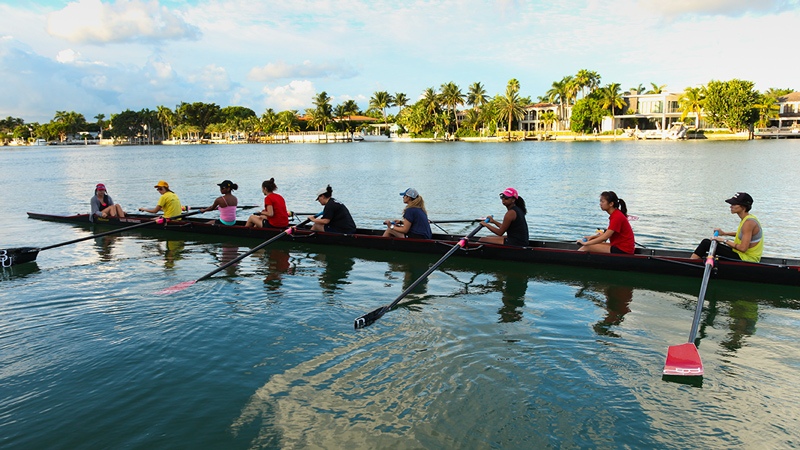
We are an NCAA Division II school and a member of the Sunshine State Conference with 12 varsity teams, including men's baseball, basketball, golf, soccer and tennis; and women's basketball, golf, rowing, soccer, softball, tennis and volleyball. So far, we've won 24 NCAA championships, had 338 All-Americans, 413 Scholar All-Americans, and nine NCAA "Women of the Year" finalists, the most of any Division II school. Not bad at all, but we're going for more.
For students currently enrolled in classes at Barry, we have a wealth of resources you can tap into to bring ease and efficiency to your university experience. Get the help you need with administrative or financial questions, or check out course catalogs to help plan your schedule by semester. All the information you need to excel is at your fingertips.

Access research resources, technology, study spaces, and expert support to help you succeed academically.

Barry students are supporting a Miami-Dade organization committed to tackling serious social issues. At the same time, the students are learning how the organization harnesses “people power.”
“Through service-learning, the students are preparing to help PACT seek systemic solutions to social problems affecting Miami-Dade County,” said Liz Valdez James, experiential learning coordinator in the Center for Community Service Initiatives (CCSI).
Miami PACT—People Acting for Community Together—is a large interfaith coalition known for its “Build people power for justice” mission. Founded in 1988, the countywide coalition is composed of representatives of 40 congregations.
So far this semester, the students have participated in an orientation and a “house meeting.” They will attend PACT’s annual meeting next Monday.
James facilitates the service-learning and civic engagement (SLCE) module focused on “people power.” The module is designed to engage students primarily in PACT’s grassroots community organizing.
During the service-learning orientation, students learned about PACT’s mission, community-organizing approach, and priority issues.
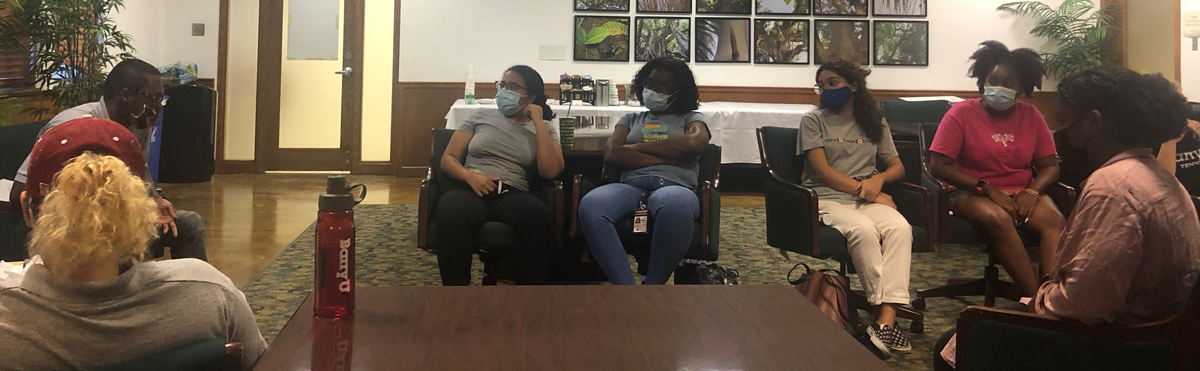
On October 4, Barry Service Corps Fellows Autumn Davis and Daryle Pyles facilitated a “house meeting” as part of the “listening process in PACT’s annual cycle,” James noted.
The 13 participating students expressed their shared concerns about several issues, including gun violence and the usually slow response and recovery after natural disasters.
Immediately after the in-person house meeting, Davis and Pyles took part in PACT’s “report-back meeting” through videoconferencing.
Every year, PACT congregations conduct dozens of listening sessions and, based on the results of those sessions, vote to determine the community problems on which they will focus their work, the organization says at its website.
PACT’s current priority issues are policing and arrests, “caring for creation,” community IDs, gun violence, and affordable housing.

Barry Service Corps Fellows Autumn Davis (left) and Daryle Pyles facilitated a house meeting as part of PACT’s listening process. Experiential Learning Coordinator Liz James (right) facilitates the service-learning and civic engagement module focused on “people power.”
Next Monday (Oct. 25), students will attend PACT’s annual meeting to observe the closing out of the listening process. Member congregations will receive updates on the commitments made by elected officials and then vote on focus issues for the 2021–2022 cycle.
“This vote will signal to the Barry students what issues will inform their next service-learning activity: the production of testimonial video clips,” explained James, the experiential learning coordinator. “The SLCE module participants will identify and interview someone personally affected by one of the focus issues voted on for this year. The video clips will be shared with PACT and may be used as part of their strategic communication with elected officials.”
Teasha Fahie described the house meeting as “insightful.” She appreciated that “the meeting allowed all participants time to reflect on the traumas in life.”
This semester’s four service-learning and civic engagement (SLCE) modules are engaging students in addressing various social issues while supporting the work of community partners.
The titles of the modules are “Food Security,” “People Power,” “Welcoming New Americans,” and “Youth in Action.” Each module requires at least 10 hours of community-focused engagement.
Details of each module are found in the GivePulse system:
The SLCE modules were developed by the Center for Community Service Initiatives (CCSI). For further information, contact the CCSI at service@barry.edu or qep@barry.edu.
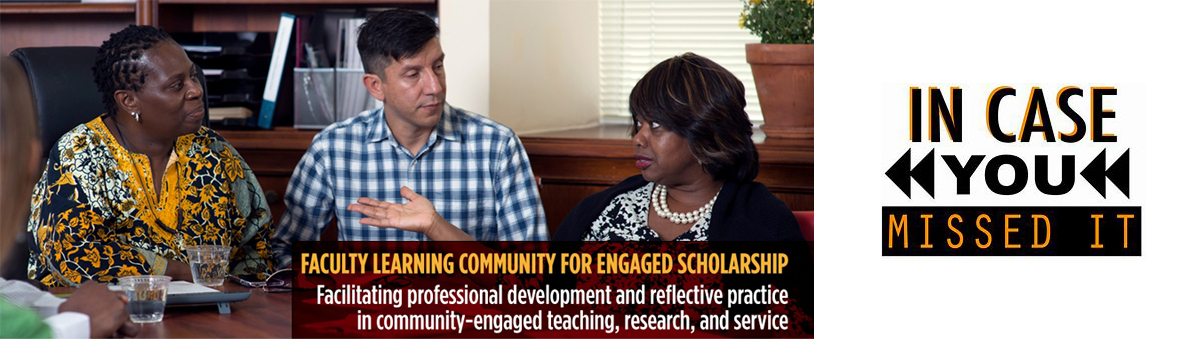
Members of the Faculty Learning Community for Engaged Scholarship (FLC) will get together on campus next week to celebrate the publication of their book on experiential learning. The celebration will coincide with the Presidential Faculty Seminar Series.
President Dr. Mike Allen and Provost Dr. John Murray have been invited to the event, which will be hosted jointly by the Faculty Senate and the FLC.
Authors of “Experiential Learning in Higher Education” are expected to share information and highlight themes from their chapters.
FLC members are inviting their faculty colleagues to the seminar, which is scheduled for 12:20 to 1:30 on Thursday, October 28. They will meet in Weber Grand Hall.
The FLC is scheduled to meet virtually on November 18, from 12:20 to 1:30, and sometime in February. The November meeting will focus on “place-based community engagement,” the organizers said.
Bread for the World’s Racial Wealth Gap Learning Simulation will take place this Tuesday (Oct. 19) in Thompson Hall’s Kotska Room, beginning at 6 p.m.
“Participants will learn how federal policies created structural inequalities in many areas, such as property ownership and education, and how these policies increase hunger and poverty in communities of color,” the organizers say.
They organizers added that participants will come to “understand the role of racial inequity in policies and why racial equity is so important to ending hunger and poverty in the United States.”
Bread for the World is “a collective Christian voice urging our nation’s decision makers to end hunger at home and abroad.” According to Bread, “By changing policies, programs, and conditions that allow hunger and poverty to persist,” the organization provides “help and opportunity at home and far beyond where we live.”
Registration for the Racial Wealth Gap Learning Simulation is required.
For additional information, contact Kaitlyn Gallagher program facilitator, in the CCSI at kgallagher@barry.edu.
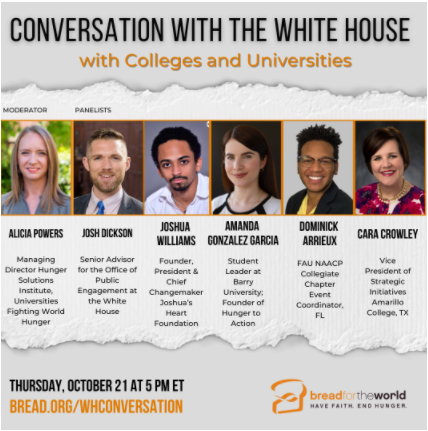
COMMUNITY ENGAGEMENT AWARDS: The CCSI is issuing an early call for nominations for the 2022 Community Engagement Awards.
PARTICIPATORY ACTION RESEARCH: Doctor of Education students have conducted participatory action research in collaboration with local community agencies.
COMMUNITY ENGAGEMENT SYMPOSIUM:“Effectively Balancing Community Impact With Student Learning Outcomes” is the theme of the 2022 Community Engagement Symposium here at Barry.