

























"ORIGENES DE LA HABANERA: DE LA CONTRADANZA AL TANGO EN CUBA"
In his lecture, Arsenio Rodríguez Quintana examined the 19th-century emergence of the habanera in Cuba, detailing how the genre synthesized European forms—such as the French contradanza, minuet, and waltz—with African drumming, traditional Spanish zarzuela, and local Cuban syncopation. Quintana highlighted pivotal historical moments that shaped the rhythm, including the arrival of over 30,000 French and Haitian emigrants during the Haitian Revolution, which established a strong French musical presence across Havana and eastern Cuba. This movement helped foster a free Black and Afro-Cuban bourgeoisie who sent musicians to study in Paris and laid the groundwork for modern Cuban music.
The presentation detailed key historical figures and milestones that carried the habanera onto the world stage:
Manuel Saumell & José White: Recognized for incorporating Afro-Cuban rhythms into classical formats, including White's iconic 1851 composition "La Bella Cubana".
María Martínez: The Afro-Cuban soprano who became the first diva of the tango and habaneras to achieve acclaim in Paris in 1848.
Early Recordings & Cinema: Rosalía Chalía Herrera García recorded the first lyrical habanera ("Tu") in 1897. Decades later, artists like María Teresa Vera popularized the genre through early Columbia and RCA recordings, leading to the habanera becoming the first Cuban music genre featured in sound film in 1929.
Cross-Genre & Global Influence: Rodríguez Quintana pointed to the habanera's role as a structural precursor to American jazz—influencing figures like Louis Moreau Gottschalk, Scott Joplin, Jelly Roll Morton, and George Gershwin—as well as the Argentine tango. He also highlighted iconic global works like "La Paloma", which holds a Guinness World Record and remains woven into international traditions ranging from European opera to ceremonies in Tanzania and Romania.
The lecture concluded with a discussion on the living tradition of the habanera today. From coastal cantades in Catalonia and across Spain to 21st-century adaptations by contemporary international artists like Stromae, the habanera continues to serve as a vital sonic bridge linking memory, displacement, and cultural identity.
Attendees participated in an engaging Q&A and networking lunch, discussing the power of music as an archive of exile and diaspora history. Rodríguez Quintana also presented his companion book, Orígenes de la Habanera: De la Contradanza al Tango en Cuba, equipped with multimedia QR links detailing the genre's chronology.
When: Friday, October 09, 2026 | 12:00 PM – 2:00 PM
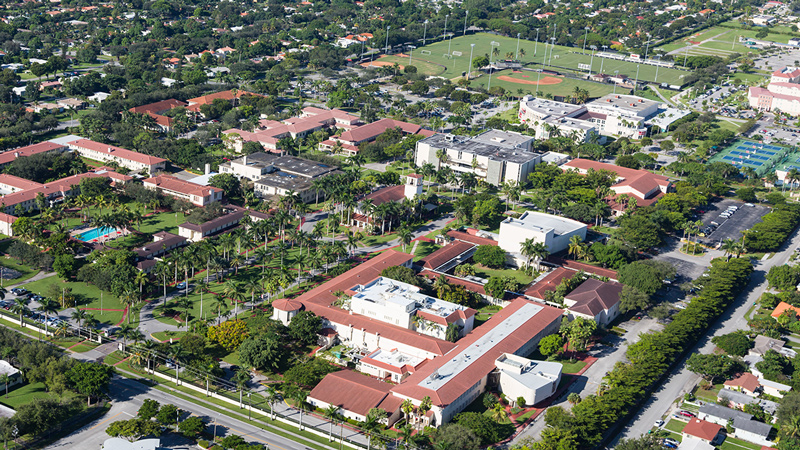
Where: Andy Gato Gallery, Barry University (11300 NE 2nd Ave, Miami Shores, FL 33161)
Speakers / Panelists: Arsenio Rodríguez Quintana
The Lecture Series on Exile is organized by the Department of English and Foreign Languages, the Institute for Immigration Studies, the Studio for Languages and Cultures, and the Buccaneers Hispanic Society at Barry University. For more information, please contact the Department of English and Foreign Languages.