























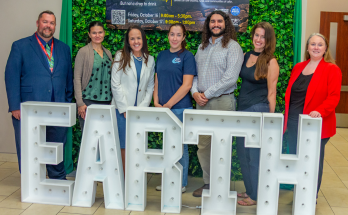
The future of Florida's water resources took center stage at Barry University School of Law as environmental advocates, elected officials, legal scholars, and students gathered for a two-day symposium examining the challenges facing the state's waterways and the legal and policy efforts needed to protect them.
Held October 16–17, 2026, the annual fall environmental law symposium was hosted by Barry Law and its Center for Earth Jurisprudence (CEJ), in partnership with Orange County Government and the Office of Orange County District 1 Commissioner Nicole Wilson, a Barry Law alumna.
The event explored the intersection of environmental law, public policy, conservation, and environmental justice, with discussions ranging from groundwater management and development pressures to the growing environmental impact of artificial intelligence data centers.
“Protecting Florida’s water resources requires a commitment to environmental stewardship, collaboration, and justice,” said Dean Charles H. Rose III. “Through the work of our Center for Earth Jurisprudence, the dedication of community leaders, and the involvement of Barry Law students in our environmental programs, we are helping address critical challenges facing our state while preparing the next generation of advocates to protect its natural resources.”
Bringing Environmental Policy and Advocacy Together
The symposium opened Friday in Barry Law's Moot Courtroom with remarks from Commissioner Wilson and Professor Margaret Stewart, director of Barry Law's Environmental and Earth Law Clinic.
Stewart challenged participants to consider not only the environmental implications of water scarcity but also the communities most affected by limited access to clean water.
"Who has access to clean, reliable water, and what will it take to protect that access for the future?" Stewart asked. "That question is a legal one, but it is also a question about justice."
The opening panel, "Water at Every Level: Planning, Funding, and Protecting Florida's Future," brought together Congressman Maxwell Frost, State Senator Carlos Guillermo Smith, State Representative Rita Harris, and Commissioner Wilson. Moderated by investigative journalist Jason Garcia, the discussion examined how legislative priorities, government policies, and public investment influence Florida's ability to protect its water resources.
Panelists emphasized the importance of strengthening environmental protections and recognizing the long-term consequences of decisions affecting Florida's ecosystems.
A second panel, "The Forgotten Resource: The Importance of Water Management," shifted the discussion toward practical conservation strategies.
Moderated by CEJ Director Jonathon Keene, the panel featured Orange County Utilities Deputy Director Kerry Kates, UF/IFAS Water Resources Specialized Agent Yilin Zhuang, and Kissimmee Waterkeeper John Capece.
Panelists examined approaches to reducing groundwater consumption, expanding water reclamation efforts, and identifying alternative water sources. The discussion also highlighted the importance of individual conservation practices, particularly reducing unnecessary landscape irrigation.
Examining Emerging Environmental Challenges
As Florida continues to experience development pressures and increasing demand for natural resources, the symposium also explored new environmental challenges associated with emerging technologies.
"The Expanding Footprint of AI: Data Centers, Water, and Climate" examined the environmental implications of artificial intelligence infrastructure, including the water requirements of data centers and their potential effects on surrounding communities.
The panel featured Dr. Stan Vermund of the University of South Florida College of Public Health, Earthjustice Senior Attorney Christine Reichart, and Rollins College computer science professor Dan S. Myers. Garcia moderated the discussion.
The conversation addressed growing concerns about the water and energy demands associated with AI infrastructure, particularly as Florida considers the implications of continued technological and industrial development.
Panelists also examined environmental justice considerations, including the disproportionate burdens that large-scale infrastructure projects can place on vulnerable communities.
Professor Jaclyn Lopez, director of the Jacobs Public Interest Law Clinic for Democracy and the Environment at Stetson University College of Law, delivered a featured presentation examining the complexities of environmental protections under existing legal frameworks.
Her presentation, focused on the "Public Interest Paradox," explored how laws intended to serve the public interest may produce competing priorities when environmental preservation intersects with other policy objectives.
"While the ecosystems are interconnected, our legal and policy decisions aren't always," Lopez observed.
Drawing on state and federal law, Lopez discussed how environmental advocates can use existing legal standards to advance conservation efforts.
A Call to Protect Florida's Springs and Waterways
Friday's keynote address featured Ryan Smart, executive director of the Florida Springs Council, who discussed the organization's ongoing efforts to defend Florida's springs, rivers, and other water resources.
Smart highlighted successful conservation initiatives alongside setbacks that continue to challenge environmental advocates throughout the state.
His remarks emphasized the importance of sustained public engagement, collaboration among environmental organizations, and a willingness to challenge decisions that threaten Florida's natural resources.
The first day concluded with reflections from Commissioner Wilson and Keene, who recognized the contributions of symposium participants and reaffirmed the importance of continued environmental advocacy.
Keene also highlighted Barry Law's longstanding commitment to environmental legal education and the work of the Center for Earth Jurisprudence.
"For 20 years this institution has fully supported our environmental law program, including the Center for Earth Jurisprudence, which continues to believe that Nature has a seat at the table and that they have rights," Keene said.
Barry Law Students Engage in Global Environmental Justice Discussions
The symposium continued Saturday with an academic colloquium organized by Barry Law's Environmental and Earth Law Journal.
Led by the journal's executive board, the second day expanded the conversation beyond Florida, bringing together students, alumni, and international scholars to examine environmental justice challenges affecting communities around the world.
The first panel, "Common Ground, Uncommon Burdens," featured presentations exploring the relationship between environmental protection, legal systems, and the unequal burdens of environmental degradation.
Participants included Barry Law student Kali McElroy, Barry Law alumnus Kevin Portillo-Godinez, and Nandini Sharma of the United Nations Association of the National Capital Area.
A second panel, "Beyond the Fence Line: Global Environmental Justice," examined environmental challenges across international borders.
Barry Law's Jessica Gott Bamberg joined scholars Jyoti Singh Meena, Dr. Dhawal Shankar Srivastava, Robin Happel, Dr. Nelson Ologhaiden, and Dr. Abimbola Olowa in discussing environmental concerns affecting their respective communities and the importance of international collaboration.
The colloquium provided Barry Law students with opportunities to engage directly in scholarly discussions, explore environmental justice from an international perspective, and contribute to conversations about the role of law in addressing complex environmental challenges.
Environmental and Earth Law Journal Editor-in-Chief Virginia Grier delivered closing remarks emphasizing the shared responsibility of environmental advocates across jurisdictions.
"Environmental harm does not stop at a property line, a county line, or a national border, and neither can the people working to address it," Grier said.
Advancing Environmental Advocacy Through Legal Education
The two-day symposium reflected Barry Law's ongoing commitment to preparing future legal professionals to address environmental challenges through scholarship, advocacy, and community engagement.
Through the Center for Earth Jurisprudence, Environmental and Earth Law Clinic, and Environmental and Earth Law Journal, Barry Law provides opportunities for students to explore the relationship between legal systems, environmental protection, and the communities affected by environmental decisions.
By connecting students with policymakers, practicing attorneys, scientists, and conservation advocates, events such as the annual environmental law symposium reinforce the role of legal education in advancing meaningful environmental protections.
As Florida confronts increasing pressures on its water resources, the discussions highlighted a central message: protecting the state's environmental future will require collaboration, informed policy decisions, and a continued commitment to advocacy.