









LITERATURE OF EXILE AND DISPLACEMENT: "NATURALIZED IN AMERICA: TALES FROM A CUBAN EXILE FAMILY"
When: Tuesday, March 17, 2026
Where: Andreas 112, IIS Immigration Conference, Barry University
Speakers / Panelists: Dr. Patricia Feito, Dr. Celeste Landeros
Dr. Patricia Feito is an Associate Professor of English at Barry University, where she has been teaching literature, writing, and humanities for many years. A Cuban exile herself, Dr. Feito brings to her work the deeply personal and richly literary perspective of two generations of immigration — first from Cuba to Spain, and then from Spain to the United States. In this textbook anthology, which is used in undergraduate courses on exile and displacement across the country, her essay appears alongside contributions by acclaimed authors such as Edwidge Danticat.
In her presentation, Dr. Feito explored the theme of exile not simply as a historical or geographical experience, but as a profound state of mind — a condition of being simultaneously here and there, of carrying memory, identity, and longing across borders and generations. Drawing on the literary device of metaphor, she structured her essay around three luminous objects, each one a snapshot of a pivotal moment in her family's journey: a Kodak Retina Reflex camera from 1960, a wooden picnic table, and a medal awarded by the American Institute of Architects.
Through these three objects, Dr. Feito traced the arc of her family's exile — from the charged and emotional departure from Havana's international airport in May of 1960, to the humble dignity of their first home in the United States, to the triumphant moment when her father, renowned Miami architect Jose Feito, was inducted as a Fellow of the American Institute of Architects in Orlando in 1985. Her reading wove together themes of memory, trauma, acculturation, identity, and the enduring dream of every immigrant family: that perseverance and quiet grace can transform displacement into belonging.
The presentation was followed by a rich and moving Q&A session, during which audience members — many of them immigrants themselves — shared their own reflections on exile, home, and the remarkable circles that history draws. Among the most resonant moments was the revelation by Barry faculty member Yamilet Hernandez that the Spanish Consulate in Coral Gables — where she had recently gone to apply for Spanish citizenship — is housed in a building designed by Dr. Feito's father, Jose Feito. The very building that stands as the official home of Spain in South Florida was built by the hands of a Cuban exile who had once fled to that same country. The room fell silent at the power of that circle.
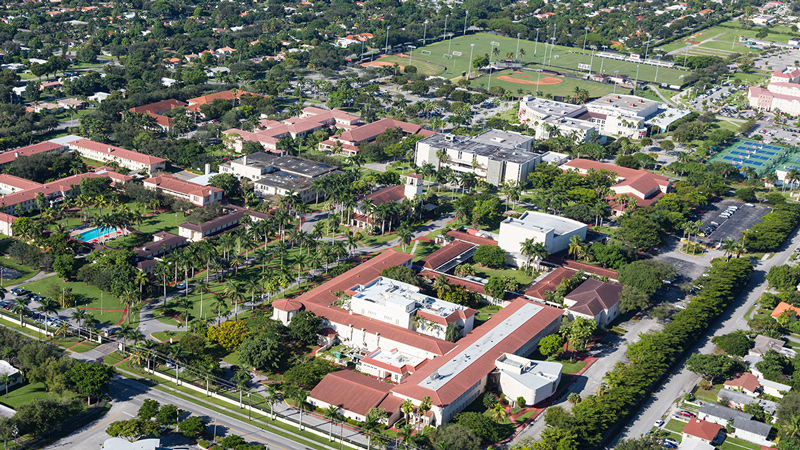
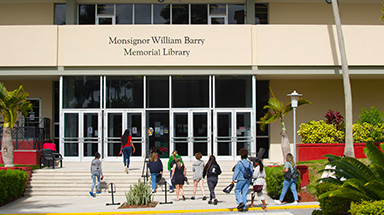
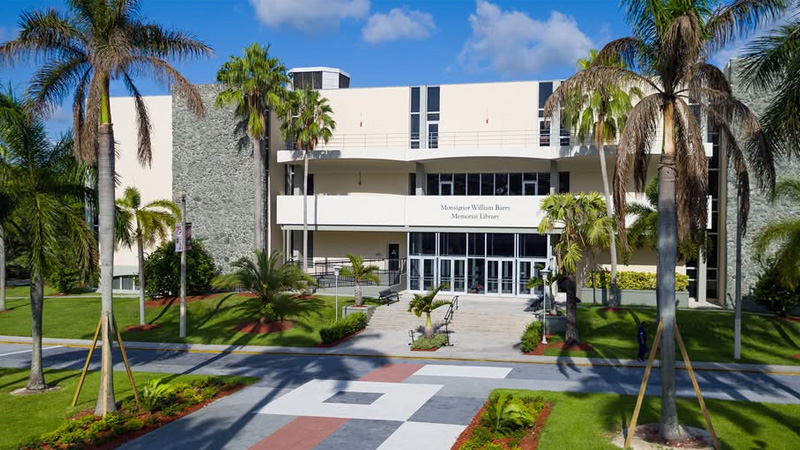
Dr. Feito also noted with pride that her father's architectural legacy lives on at Barry University itself, where he designed several buildings on campus, including what was formerly known as the Wiegand Annex — a space where Barry students continue to study and learn to this day.
The lecture was a testament to Barry University's commitment to fostering dialogue around the human experience of exile and displacement, and to the enduring power of literature to give voice to that experience with honesty, beauty, and grace.
The Lecture Series on Exile is organized by the Department of English and Foreign Languages at Barry University and the Institute for Immigration Studies (IIS). For more information, please contact the Department of English and Foreign Languages.